

How to Choose a Bible Study
You’ve determined your format. Now comes the practical question every leader faces at some point: which study do I actually use?
The market for Bible study materials is enormous, and publishers produce hundreds of studies every year. Many of these studies are adequate and serve a meaningful purpose but can often be just another means of content. Others are excellent, but some do more harm than good — not because they are dishonest, but because they are shallow, poorly structured, or built around the author’s personality rather than the text of Scripture. The wrong study doesn’t just waste your group’s time. It can shape poor study habits, reinforce shallow thinking, and leave people feeling like they’ve engaged with the Bible when they’ve actually spent most of their time with someone else’s opinions about it.
Choosing well matters, and choosing well requires a filter.
Five questions will tell you almost everything you need to know about any Bible study before you commit your group to it.
Question 1: Does It Teach You How to Study, or Just What to Think?
The Problem
Many Bible studies do all the thinking for you. They give you a passage, tell you exactly what it means, and ask you to fill in a blank or two along the way. It feels productive — you are writing something down — but you are not actually learning how to study. You are learning how to copy someone else’s conclusions. This creates dependence. The next time you open your Bible on your own, you don’t know where to start because you have never walked through the process yourself.
What to Look For
Look for studies that ask questions designed to make you dig further into the text yourself. A good study moves through a clear progression: observing what the passage actually says, interpreting what it means in context, and applying it to your life. You should find space for personal discovery rather than pre-filled answers. The questions should develop the type of transferable skills that work in any book of Scripture because they’re teaching you how to read, not just what to conclude.
This is the inductive method — observation, interpretation, application — and it is not a modern invention. It reflects the biblical pattern modeled in Nehemiah 8:8, where the Word was read distinctly, the sense was given, and the people were helped to understand. That sequence — what does it say, what does it mean, how do I live it — has been the foundation of faithful Bible engagement since Ezra stood before the Water Gate.
Ask Yourself: Will I learn to study Scripture, or just learn someone’s opinions about Scripture?
Question 2: Does It Handle Scripture Faithfully?
The Problem
Some studies cherry-pick verses, strip them from their context, or use a passage as little more than a springboard for the author’s personal opinions. A verse gets quoted, a brief thought follows, and the study veers off into territory that has little to do with the text itself. It may feel inspirational, but it is not faithful Bible study. As the saying goes: when you take the text out of context, you are left with a con.
What to Look For
Choose studies that work through entire books of the Bible rather than jumping between selected passages. Look for attention to context at every level — what comes before and after a verse, who the original audience was, and what the historical situation looked like. The best studies include cross-references that show how Scripture interprets Scripture, and the questions are grounded in the actual text rather than requiring assumed background knowledge. The books of the Bible were written as complete works, not as collections of isolated verses. A study that respects this will guide your group through the text in the order it was given.
Ask Yourself: Does this study respect the context, or does it just grab verses that fit a theme?
Question 3: Does It Align with Sound Doctrine?
The Problem
Not every Bible study handles Scripture with theological integrity. Some engage in eisegesis — reading meaning into the text rather than drawing meaning out of it. Others proof-text to support cultural trends, letting the spirit of the age dictate what the Bible “really means.” Still others elevate personal experience over biblical truth, treating the author’s story as equally authoritative as the inspired Word.
Poor theology shapes poor doxology. What a group believes about God determines how they relate to Him. A study that consistently mishandles Scripture — even with warm and encouraging language — will gradually shape how your group understands God, salvation, holiness, and the Christian life. What feels nourishing in the moment can quietly erode the foundation of sound belief.
What to Look For
Look for studies where Scripture interprets Scripture, not ones where the surrounding culture is used to interpret Scripture. Check for theological integrity on core doctrines. Consider whether the study aligns with your church’s statement of faith and whether the author demonstrates a track record of faithful Bible teaching. A helpful diagnostic: does the study clearly affirm the authority and sufficiency of Scripture? Does it explain the text before applying it? If the answer to either is no, that is a significant red flag — regardless of how polished the packaging is.
Ask Yourself: Does this study let the Bible speak, or does it force the Bible to say what the author wants?
Question 4: Is It Pastoral or Just Popular?
The Problem
Some of the most widely used Bible studies are popular precisely because they are easy, entertaining, and built around a recognizable name or personality. Popularity is not a measure of quality. A study that draws a crowd is not necessarily one that draws people into the Word. Many popular studies are light on Scripture and heavy on the author’s personal stories, cultural observations, and motivational content. They are enjoyable. They are not transformational.
What to Look For
A pastoral study prioritizes the spiritual formation of the group over the profile of the author. It stays focused on Scripture and applies timeless truth rather than chasing trending topics. The author’s voice should serve the text, not replace it. Look for humility in the writing — a study that points you to the Word rather than to itself. The best studies are written by people who have spent years in the text and years with people, not just years building a platform.
Ask Yourself: Is this study built around the Word, or built around a personality?
Question 5: Does It Hit the Right Depth for Your Group?
The Problem
A study that is too shallow leaves the group bored and unchallenged. Fill-in-the-blank answers, surface-level observations, and no real engagement with the text are signs of a study that will not produce growth. On the other extreme, a study that is too deep can be just as discouraging. Dense academic language, assumptions about knowledge of Greek or Hebrew, and a tone that feels more like a seminary lecture than a guide for growing believers will drown a group before the second week.
What to Look For
The sweet spot is scholarly rigor without academic language — depth that is accessible. The group should feel challenged but not lost, stretched but not overwhelmed. Look for clear explanations that do not dumb down the content, meaningful historical and literary context that is provided rather than assumed, and questions that push beyond surface reading without requiring a theological degree to engage. Consider whether the depth is appropriate for your specific group — their maturity, their background, and the time they can realistically give to preparation each week.
Ask Yourself: After reading a sample lesson, does my group feel engaged and able to understand?
A Study Worth Your Time Will Check All Five
Run any study you are considering through these five questions before you commit your group to it. A study that clears all five is worth your time and theirs. A study that fails two or more is worth setting aside regardless of how attractive the packaging or how familiar the name on the cover.
The right study does something that no amount of enthusiasm or skilled facilitation can compensate for when it is absent — it puts the group in genuine contact with the Word of God, week after week, in a way that builds their ability to keep going on their own.
If you want to see what a study that addresses all five of these questions looks like in practice, Exploring Ezra: Return, Rebuild, Restore was built on exactly this framework. It works through the book of Ezra verse by verse, moves the group through observation, interpretation, and application, and provides free leader teaching notes for every lesson. You can see the whole approach in the sample lesson. It is a place to start — not because it is the only option, but because it is an honest one.
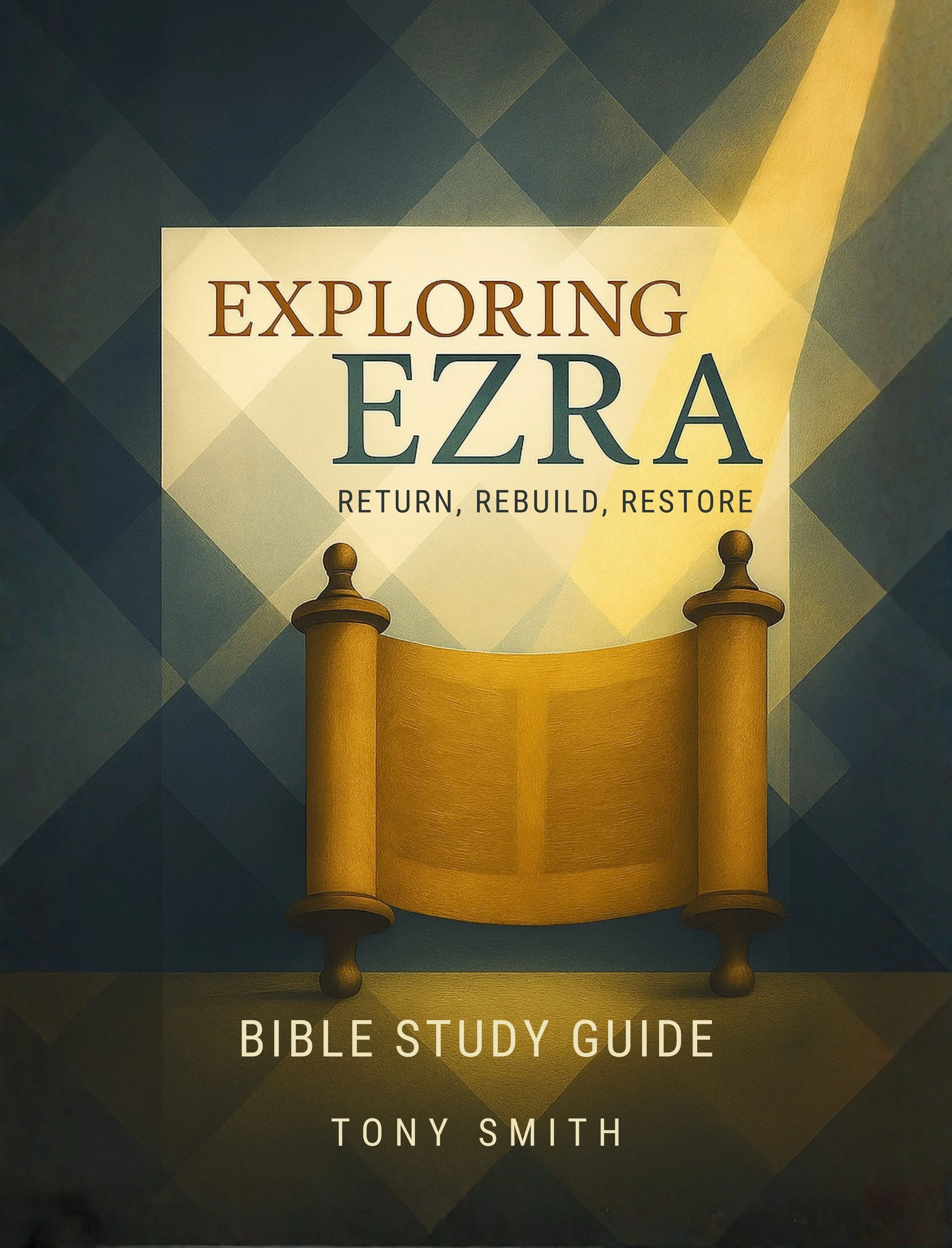
Now that you have the five questions, the best way to use them is to run an actual study through them. The quickest way to judge any study is to read one for yourself. The free sample lesson shows exactly how an Exploring Ezra lesson is built — observation, interpretation, application — with free teaching notes provided for every lesson.
Why Exploring Ezra →