

Types of Bible Study
First, there is no right or wrong Bible study type. I have participated and have matured from each of these types of study. Again, anytime we’re opening the Word of God and it has the center of attention the Lord will use it.
So, before you can lead a Bible study well, you need to know what kind of study you are leading. The format is not a minor detail. It determines how you prepare, how you facilitate, what you ask of your group, and how much structure the discussion requires. A leader who tries to run a deep inductive study like an open discussion will lose the group. A leader who runs a book study like a lecture will lose the room.
There is no single format that works for every group in every season. The right format depends on the maturity of your group, the depth of commitment they can give, and what God has put on your heart to study. What matters is that you choose intentionally and lead accordingly.
Five formats are worth knowing. Each has its place. Each has its demands.
1. Book Study / Expository
What It Is
A book study works through a single book of the Bible chapter by chapter, verse by verse, from beginning to end. Nothing is skipped, and nothing is assumed. The group follows the text from the first verse to the last, allowing the structure and flow of the book to shape the discussion rather than imposing a theme or topic from outside the text.
This is one of the most comprehensive formats available, and the one most closely aligned with how the biblical authors intended their writing to be read. Paul wrote letters. Moses wrote history. John wrote apocalyptic vision. Each book has a beginning, a middle, and an end — and working through the whole of it is the surest way to understand any part of it.
What Leading It Requires
The leader must be prepared to work through the text carefully and consistently week after week. This is not a format for winging it. The leader needs to understand the passage before the group arrives, anticipate where questions will arise, and know enough about the context of the book to keep the discussion grounded. A structured guide built around the book removes much of this burden and allows the leader to focus on facilitation rather than content generation. This format is very leader dependent and if there isn’t a suitable backup the group will miss that week.
Where It Fits
A book study fits best with a group that is committed, hungry, and willing to stay in one place for an extended period to embrace what the Holy Spirit will speak through the Scriptures. It is ideal for discipleship groups, men’s and women’s studies, and any group that wants to grow in their understanding of Scripture as a whole rather than sampling from it. This is an excellent choice for all believers, but it is essential to have a humble leader who knows how to lead without being a lecturer.
This is the format Exploring Ezra: Return, Rebuild, Restore was built on — it moves through the book of Ezra chapter by chapter across ten lessons, letting the structure and flow of the book set the course rather than a theme imposed from outside. The teaching notes carry the context and cross-references so the leader can facilitate rather than lecture. You can see how one lesson handles the text in the sample lesson.
Pros
• Depth: Nothing is missed. Every verse, every chapter receives attention, building a complete picture of the book and its message.
• Context: Working through the whole book preserves the author’s intent and protects against taking passages out of context.
• Skill building: Over time the group learns to read Scripture carefully, slowing down and observing what the text actually says before drawing conclusions.
• Continuity: Week to week the discussion builds on what came before, creating momentum and a shared understanding within the group.
Cons
• Long commitment: A verse-by-verse study of a substantial book can run for months even years. That commitment can feel daunting and may not suit every group or season.
• Slower pace: Newer believers or those accustomed to lighter studies may find the pace slow or the depth intimidating at first.
• Leader preparation: The format demands consistent, thorough preparation. A leader who falls behind in their own study will feel it immediately in the discussion and those that attend will notice as well.
2. Guided Study
What It Is
A guided study uses structured questions to lead the group through a theme, a text, or a topic. The questions do the heavy lifting — they draw the group into the passage, guide observation, prompt interpretation, and move toward application. The leader’s role shifts from teacher to facilitator, using the questions as the framework for the discussion rather than carrying it personally.
A well-designed guided study keeps the group in the text without requiring the leader to be an expert. The questions point to the passage. The passage answers the questions. The leader holds the space and keeps the conversation moving.
What Leading It Requires
The leader needs to work through the questions before the group meets — not to have all the answers ready to deliver, but to know the text well enough to recognize a good answer when the group finds it and redirect when the discussion drifts. The leader must resist the temptation to answer all of the questions but extract what others have studied throughout the week. Ask, wait, and let the group do the work. Here the leader is the captain of the ship keeping the ship on course to reach the final destination safely.
Where It Fits
A guided study fits almost any group at almost any level. It is accessible enough for newer believers and substantive enough for mature ones when the questions are grounded in the text. It works especially well when the group is using a published study guide, as the questions are already built and the leader can focus entirely on facilitation.
Pros
• Accessible: The structured questions lower the barrier for participation. Anyone can engage with a clear question even if they wouldn’t know where to start without one.
• Text-anchored: Good scaffolded questions keep the group in the Bible rather than drifting into personal opinion and pet doctrines.
• Leader-friendly: The guide carries much of the preparation load, making this format well-suited for all leaders both new and mature and for those with limited preparation time.
• Consistent discussion: The questions create a natural rhythm that keeps the meeting moving and ensures the group covers the material.
Cons
• Quality-dependent: The study is only as good as the questions. Shallow questions produce shallow discussion. The leader should evaluate the quality of the guide before committing the group to it.
• Can feel mechanical: If the leader moves through questions too rigidly without allowing the discussion to breathe, the meeting can feel like a worksheet rather than a study.
• Risk of guide-dependence: If the group engages with the guide but not the text itself, the guide has replaced Scripture rather than illuminated it.
3. Deep Inductive
What It Is
Deep inductive study is the most rigorous treatment of the text available to a small group. It follows the three-step method modeled in Nehemiah 8:8 — observation, interpretation, and application — and it takes each step seriously.
Observation asks: what does the text actually say? Words are defined. Grammar is noted. The who, what, when, where, and why of the passage are identified before any conclusions are drawn. Interpretation asks: what does it mean? Context is examined, cross-references are considered, and the original intent of the author is pursued. Application asks: what does obedience look like in light of what we’ve learned?
This is not a casual format. It requires work before the meeting and careful attention during it. But it produces something the other formats rarely match — a group that knows how to read the Bible for themselves.
What Leading It Requires
The leader needs to be comfortable with the method and committed to modeling it consistently. This means doing the observation, interpretation, and application work personally before leading the group through it. The leader must also be willing to slow down, and to sit in a single verse for the full meeting if the text demands it. Covering ground is not the goal. Understanding is.
Where It Fits
Deep inductive study fits groups that are ready for serious commitment — mature believers who want to grow beyond surface reading, leaders who want to develop their own study skills, or any group willing to do the work between meetings. It is the format best suited to producing lasting transformation because it equips the group to engage Scripture on their own, not just in the room with a leader.
Pros
• Most thorough: No other format handles the text with the same level of care. Words, grammar, context, and cross-references all receive attention.
• Skill building: The group learns to study Scripture independently. The method transfers beyond the meeting room into personal devotion and lifelong study.
• Deep transformation: When observation precedes interpretation and interpretation precedes application, the application is grounded in what the text actually says rather than what the reader wanted it to say.
• Long-term fruit: Groups that commit to this format over time develop a depth of biblical understanding that carries them through every season of life.
Cons
• High commitment: The format demands significant preparation from both the leader and the group. It is not suitable for a group unwilling to do work between meetings.
• Steeper learning curve: Newer believers or those unfamiliar with the method may find it overwhelming at first. The leader must be patient and willing to teach the process as much as the content.
• Slower pace: A thorough treatment of a single passage can take an entire meeting. Groups accustomed to covering more ground may find the pace frustrating until they adjust to the depth.
4. Thematic
What It Is
A thematic study tracks a single theme or topic through the Bible or through a specific book of the Bible. Rather than working through a text sequentially, the study follows a thread — grace, covenant, prayer, the character of God, the nature of sin — and gathers what Scripture says about it across multiple passages and contexts.
Done well, a thematic study builds a comprehensive biblical picture of its subject. It shows the group how a theme develops across the canon, how the Old Testament sets up what the New Testament fulfills, and how the whole of Scripture speaks with one voice on the things that matter most.
What Leading It Requires
The leader needs a clear central question or theme before the study begins and a disciplined commitment to following that theme through the text rather than chasing every related idea. Thematic studies can sprawl quickly. The leader must know when to follow a thread and when to bring the group back to the central focus. Strong cross-referencing skills and a good Bible concordance or study tool are essential.
Where It Fits
A thematic study fits groups that are wrestling with a specific question, preparing for a season of life, or wanting to understand a biblical concept more fully. It works well as a shorter series — four to eight weeks — and can serve as a bridge between longer book studies. It is also well-suited for groups with mixed maturity levels, as the topical focus tends to feel immediately relevant.
Pros
• Focused: The group spends extended time on a single subject, building a thorough and nuanced understanding of it rather than a surface impression.
• Immediately relevant: A well-chosen theme connects directly to where the group is in their walk, making the study feel personal and applicable.
• Broad biblical exposure: Tracing a theme across multiple books exposes the group to passages they might not encounter in a sequential study.
• Flexible length: A thematic study can be designed for as few as four weeks or as many as the theme demands, making it easier to fit into different seasons and schedules.
Cons
• Risk of proof-texting: Pulling verses from across the Bible to support a theme can lead to passages being read out of their context. The leader must work to preserve each passage’s original meaning even while connecting it to the broader theme.
• Less continuity: Moving from passage to passage each week can make it harder for the group to build the kind of deep familiarity with a text that a book study produces.
• Preparation-intensive: The leader carries more of the curatorial burden — selecting passages, building connections, and ensuring the theme is being followed faithfully rather than selectively.
5. Open Discussion
What It Is
Open discussion is the most common and least structured of the five formats. A passage is read — sometimes chosen in advance, sometimes selected in the moment — and the conversation that follows is driven largely by whatever surfaces in the room. There is no predetermined set of questions, no sequential movement through the text, and no structured framework guiding the discussion from observation to application.
It is worth naming this format honestly: open discussion is where most Bible studies default when no intentional format has been chosen. It feels natural and low-pressure. It can produce genuine moments of connection and insight. But without structure it drifts, and what begins as a Bible study often becomes a conversation about life with a Bible on the table.
What Leading It Requires
Open discussion places the highest demand on the leader precisely because there is no structure to lean on. The leader must do in real time what a guided study does through prepared questions — keep the group in the text, redirect when the conversation drifts, and draw out the quieter voices while managing the louder ones. This requires experience, confidence, and strong facilitation instincts. In the hands of an underprepared leader, open discussion has the potential to produce the least fruit of any format.
Where It Fits
Open discussion has its place. It works well as an entry point for groups that are new to Bible study and not yet ready for structured commitment. It can serve seekers and new believers who need space to ask questions and process what they’re hearing. It fits casual gatherings where relationship is the primary goal and deep text engagement is secondary. What it cannot do is substitute for a structured study in a group that wants genuine growth over time.
Pros
• Low barrier: No homework, no guide, no preparation required from the group. Anyone can walk in and participate, making it the most accessible format for newcomers and seekers.
• Flexible: The conversation can go where the group allows it to go. There is room for questions, for personal processing, and for the Spirit to surface what the group most needs to hear.
• Relational: The unstructured nature creates space for the kind of honest, meandering conversation that builds trust and connection within a group.
Cons
• Prone to drift: Without structure the conversation rarely stays in the text for long. Personal opinions, current events, and tangential topics fill the space that the text should occupy.
• Uneven participation: The loudest or most confident voice tends to dominate. Quieter members disengage, and the discussion reflects the views of one or two people rather than the whole group.
• Rarely transformational: Transformation requires the Word of God to do its work. When the discussion moves away from the text, the group is processing ideas rather than encountering Scripture.
• Leader-dependent: The quality of the meeting rises and falls entirely on the leader’s ability to facilitate in the moment. A structured format distributes that weight. Open discussion concentrates it.
Every group will find its natural format over time. Some will work through one book and never want to do anything else. Others will rotate between formats as the season demands. What matters is that the choice is made intentionally, the group knows what they are committing to, and the leader knows how to lead what they have chosen.
The format serves the text. The text serves the group. The group, by God’s grace, is transformed.
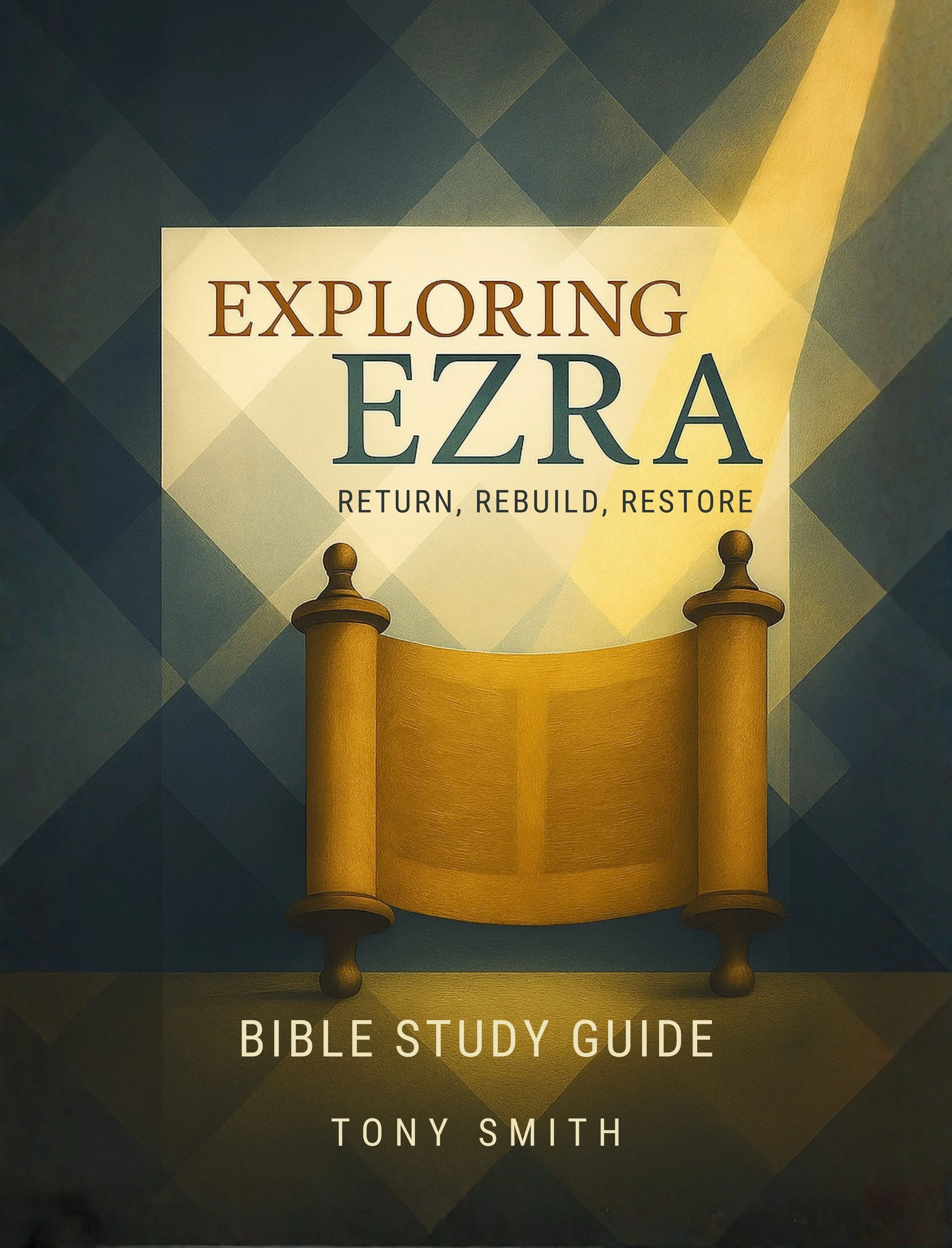
Whatever format fits your group, it helps to start with a study built to serve several of them at once. Exploring Ezra: Return, Rebuild, Restore works through the book verse by verse across ten lessons and adapts to a book study, a guided study, or a deep inductive study, with free teaching notes for every lesson. Start with a free sample lesson and see how it reads.
Why Exploring Ezra →