

Why a Structured Guide Helps
There is a tendency among experienced Bible study leaders to view a structured guide as something for beginners. As if a guide is a set of training wheels to be discarded once the leader finds their footing. It’s a fair assumption worth examining and a position I once held myself. However, the best structured guides, at every level of maturity, are always built around the Scripture. A guide provides a structure that gives the group a shared starting point and provides the leader a framework to work within.
A structured guide is not a crutch. It is a tool, and like any tool, its value is not determined by the experience of the person using it — it is determined by how well it serves the work.
What a Guide Does for the Rookie Leader
If you are leading a Bible study for the first time, the weight of the role can feel enormous. You are responsible for keeping a group of people engaged with a text you may still be learning yourself, generating questions that produce discussion without producing confusion, and holding the room together when the conversation drifts or stalls. That is a heavy weight to carry.
A Bible-centric, structured guide distributes that weight. The questions are already built. The flow through the passage is already mapped. The leader’s job shifts from content generation to facilitation, and facilitation is a learnable skill. When the guide is doing its job, the rookie leader can focus entirely on the group: who is engaging, who is pulling back, where the discussion is going, and how to bring it back when it drifts. The leader can also focus on his own growth and development.
Confidence is built through actively leading the study and not by waiting until you feel ready. By leading with good tools in hand, learning how to read the room and allowing the guide to keep the group on the text and moving forward both the leader and the group are served well. Over time the questions become instinct. The structure becomes second nature. The guide has done its work.
What a Guide Does for the Veteran Leader
The experienced leader sometimes resists a guide for the opposite reason. To the experienced leader the wrong guide feels more like a constraint and offers too much help they don’t need. The veteran has led enough studies to know how to generate questions, read the room, and move through a passage without a predetermined structure. Why defer to someone else’s framework?
Because a well-crafted guide is not competing with the leader’s skill. It is focusing their experience and channeling it where it can shine brightest. A veteran leading without a guide carries the full cognitive load of the meeting — tracking the text, generating questions, monitoring the group, managing time, and making real-time decisions about where to go next. A guide removes much of that load and frees the experienced leader to do what they do best: read people, draw out the quiet voices, recognize the moment worth sitting in, and shepherd the discussion toward something meaningful.
The most skilled facilitators are not the ones who need the least help. They are the ones who know how to use every tool available in service of the group. A good guide is one of those tools.
Often times experienced Bible study leaders also have other ministries pulling for their attention. Having a guide that meets their rigorous study expectations as a foundation for them to build on is much more efficient than trying to build the house every week. The guide operates as an assistant and not as the leader.
What a Good Guide Actually Does
Not every guide is worth using. Section 4 addressed how to evaluate one before committing your group to it, but a guide that passes that evaluation does several things that neither the leader nor the group can reliably do on their own.
It keeps the group in the text. Fellowship is precious, but it can easily drift. Personal stories, opinions, and various rabbit holes can consume the group’s time and distract from the growth found in the Word of God. A good guide operates as a guardrail and not a rigid script. It serves as a consistent point of return. When the conversation wanders, the next question brings it back. The text stays at the center without the leader having to play the role of enforcer.
It creates accountability between meetings. When the group knows that next week’s discussion will be built around questions they were meant to work through, preparation becomes purposeful. The guide gives members something specific to do with their Bible during the week. That investment pays dividends when they arrive. A group where everyone has worked through the material has something to share. The discussion is richer, the observations are sharper, and the leader is drawing out rather than pulling teeth. When the guide isn’t fill-in-the-blank, everyone’s answer will have a slightly different angle but fully grounded in the Scriptures.
It provides a shared starting point. Every person in the room comes with a different background, a different level of biblical knowledge, and a different emotional state. The guide levels the field. Everyone worked from the same questions, read the same passage, and arrived at the same starting line. That shared foundation is what makes genuine discussion possible — not just the exchange of opinions, but the comparison of observations from the same text.
It protects the discussion without controlling it. A well-built guide anticipates the important questions in a passage without exhausting every possible direction the discussion could take. It leaves room for the Spirit to surface what the group most needs from the text on a given night. The guide is a framework, not a cage. The best discussions happen inside a structure, not in spite of one.
The Guide Serves the Text, Not the Other Way Around
One caution worth naming: the guide is not the authority. Scripture is. A group that becomes more familiar with the questions in their guide than with the passage those questions are drawn from has subtly reversed the order. The guide has replaced the text rather than illuminated it.
A good leader holds the guide loosely. If the group makes an observation that the guide doesn’t ask about, follow it. If a question in the guide lands flat because the group already addressed it naturally, skip it. If the Spirit is clearly moving in a direction the guide didn’t anticipate, set the guide aside for the moment. The goal is always the text and what God wants to do in the room — the guide is simply the most reliable path toward that goal on most nights.
“For Ezra had prepared his heart to seek the Law of the Lord, and to do it, and to teach statutes and ordinances in Israel.” — Ezra 7:10 (NKJV)
Ezra didn’t arrive at the Water Gate unprepared. He had prepared his heart, sought the Word, and lived it before he taught it. The guide is part of that preparation. It is not a shortcut around it, but a tool within it. Prepare. Seek. Do. Teach. The guide serves that sequence. It does not replace it.
Exploring Ezra as an Example
Exploring Ezra: Return, Rebuild, Restore was built to serve exactly this function. It works through the book of Ezra verse by verse across ten lessons, using the observation-interpretation-application framework throughout. The questions are designed to draw the group into the text rather than deliver conclusions to them. Members work through the guide during the week and arrive at the discussion with something already invested.
For the leader, free teaching notes are available for every lesson. These notes provide background, context, cross-references, and facilitation guidance. They aren’t a script to read aloud, but a preparation resource that equips the leader to be prepared to fill in more gaps the guide cannot fill alone.
The result is a study that serves all five formats from Section 3. It works as a book study, a guided study, and a deep inductive yet accessible study by design. Its thematic threads — return, rebuild, restore — make it adaptable for thematic use as the study progresses, and for groups accustomed to open discussion, many of the structured questions are open ended with enough scaffolding not to lose the group. Free teaching notes provide the anchor that keeps the conversation in the text. It is not the only study worth using. But it is an honest example of what a guide built around these principles looks like in practice. You can learn more about Exploring Ezra: Return, Rebuild, Restore here.
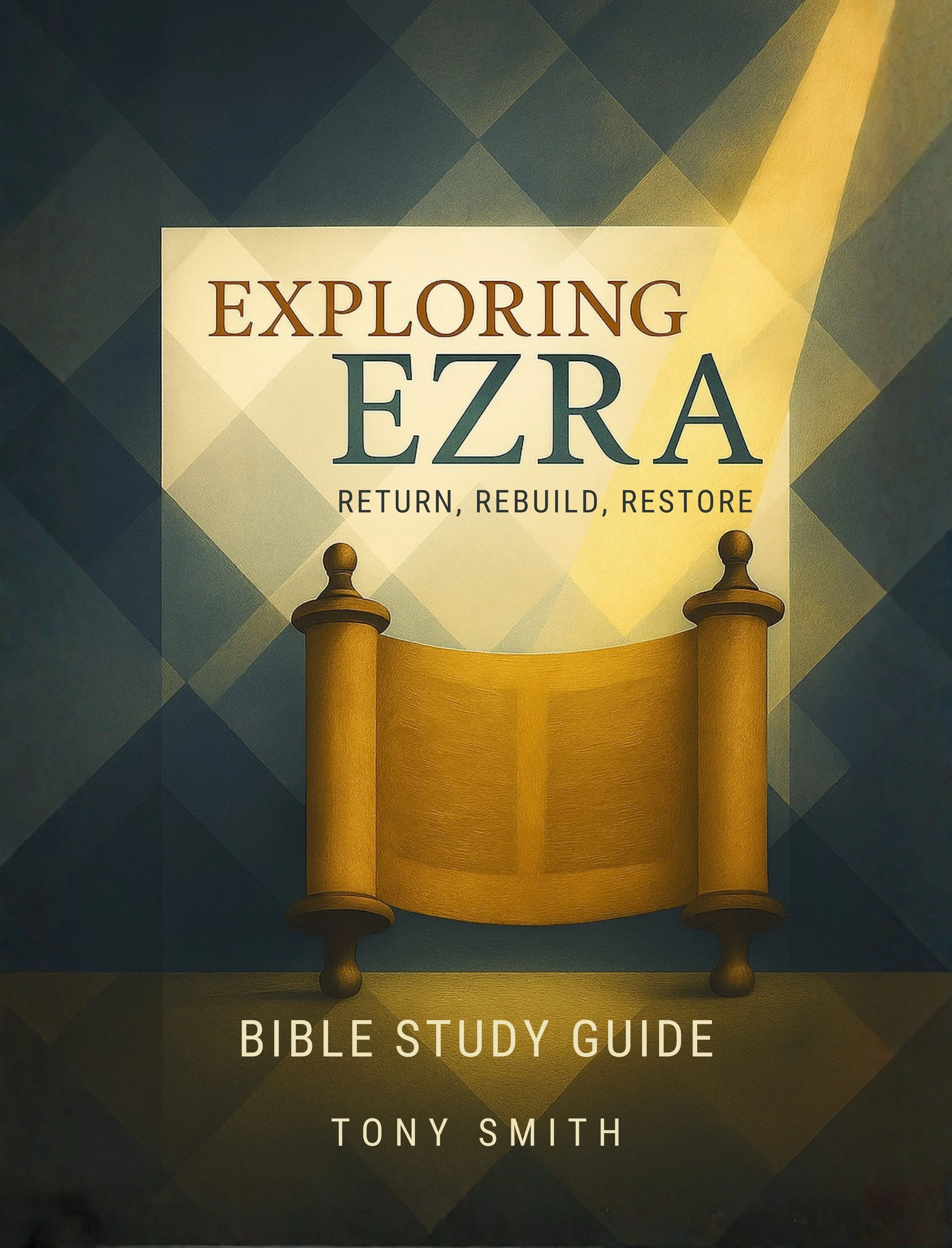
A guide is only as good as how it keeps you in the text — and the quickest way to judge that is to read one. The free sample lesson shows exactly how an Exploring Ezra lesson holds the group to the passage and moves through observation, interpretation, and application — with free teaching notes for every lesson.
Why Exploring Ezra →